
At the intersection of dual-carbon goals and consumption upgrading, the resilient flooring industry is steering onto a new track where green and quality carry equal weight. Policy guidance, changing demand, and technological iteration are converging to map out a clear path for this category.
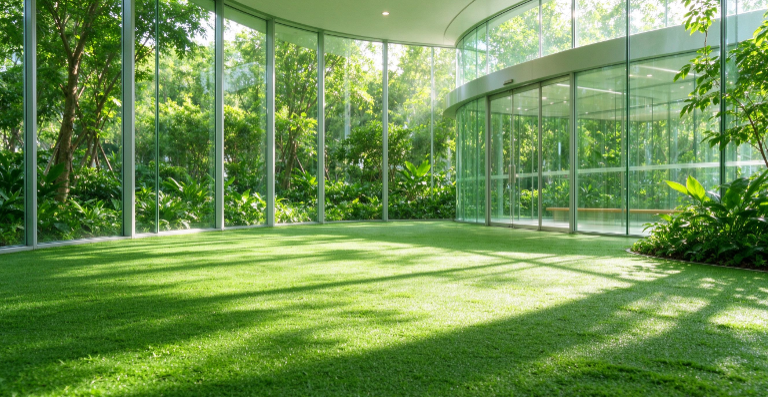
From a policy perspective, the promotion and application of green building materials has become a clear trend, and flooring with excellent environmental performance and recyclability is gaining more policy favor. On the demand side, consumers' pursuit of health, comfort, and aesthetics continues to rise, creating broad space for resilient flooring that combines environmental friendliness with functionality. At the same time, continuous technological progress means "green" and "quality" are no longer an either-or choice—innovations in eco-friendly raw materials, wear- and slip-resistant finishing, and dimensional-stability technology are constantly raising the industry's quality floor.
Under this trend, differentiation within the industry is accelerating. Companies with technological depth, capacity advantages, and well-established services are better positioned to seize the lead in upmarket competition, while those lacking core capabilities and relying solely on low-price competition face greater transformation pressure. Rising industry concentration and stronger brand effects will be prominent features in the years ahead.
For companies in this sector, seizing green opportunities while solidifying quality fundamentals is the key to navigating the cycle. Hebei Xintianxia Group Co., Ltd. has focused for twenty years on the R&D and manufacture of green flooring materials including PVC resilient flooring, SPC flooring, and WPC flooring. With products widely used in home renovation, malls and supermarkets, hotels, offices, and children's activity spaces—known for slip resistance, abrasion resistance, and easy cleaning—the company is responding to the expectations of the era and the market with greener processes and more solid quality through sustained R&D investment and capacity-upgrade projects.
Looking ahead, under the theme of green development, the resilient flooring industry will no longer be merely a provider of "flooring materials" but a co-builder of healthy spaces and better living. By staying grounded in the present, looking to the long term, and balancing green and quality, the industry's road ahead will only grow broader.


 13730103366 (Mr. Huang)
 Email: 13730103366@qq.com
 Address: No. 92, Dugu Town, Xinle City, Shijiazhuang City, Hebei Province, China
XTX·Provide one-stop plastic flooring solutions
Copyright © 2026 xintianxia.com . All Rights Reserved.